Spider undo learning method starts with a small moment: the spider undo learning method turns a bad move into a useful replay. For a casual player, that moment matters more than a long rule sheet. It tells you where to slow down, where to trust the board, and where a move that looks harmless may quietly make the next move harder.
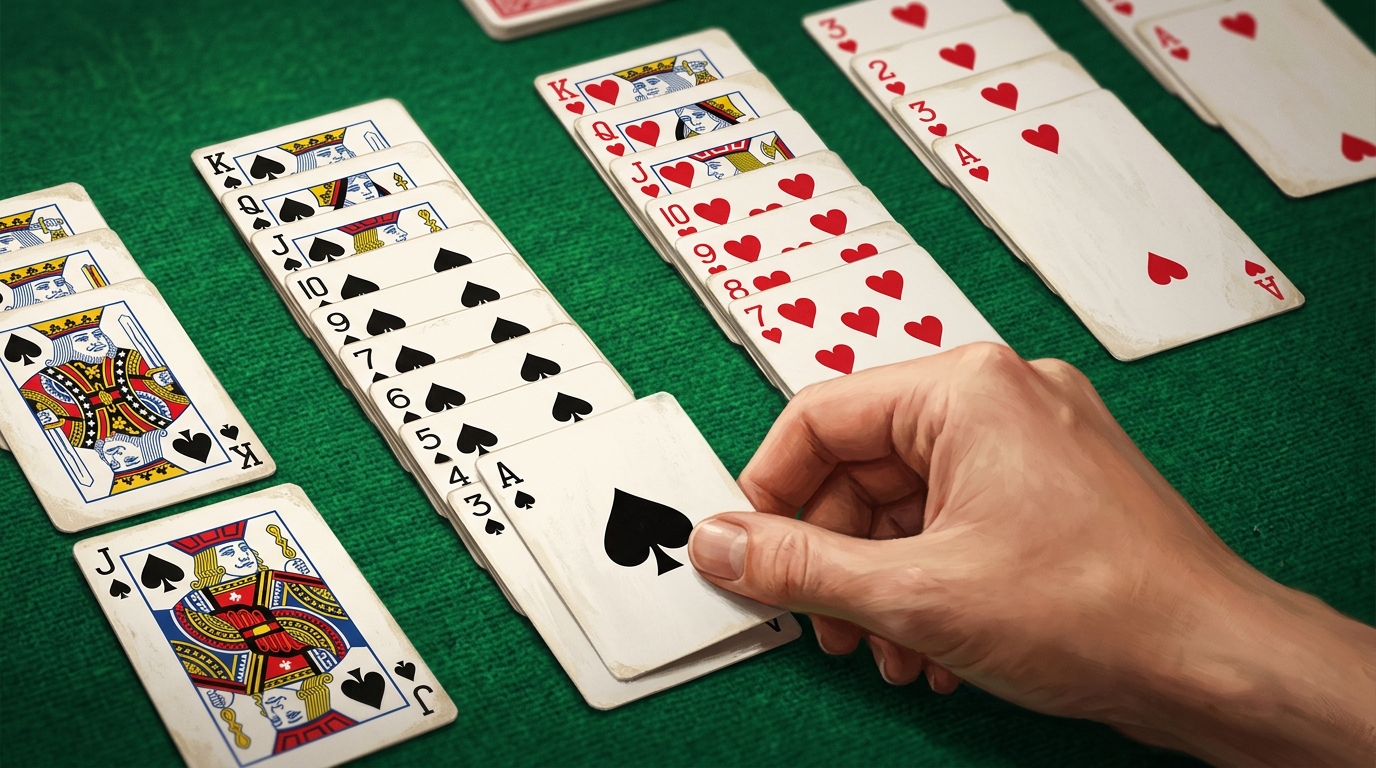
Why spider undo learning method changes the way the game feels
Undo can be abused as a way to brute-force the game. Used carefully, it becomes a teaching tool for reading hidden risk.
This is why spider undo learning method deserves its own short guide instead of being buried inside a general tips list. The best puzzle advice is usually specific. It names the pressure in front of you, then gives you a better first move.
The background is not guesswork. For this topic, a useful starting point is Bicycle Cards Spider Solitaire rules, and a second reference is Spider Palace rules guide. Those sources give the rules, history, or tournament context. The point here is simpler: turn that context into a playing habit you can use on a normal break.
The mistake spider undo learning method helps you avoid
The trap is undoing every inconvenience without asking why the move failed.
That mistake is common because puzzle games reward visible progress. A filled square, a placed card, or a connected piece feels good. The trouble is that visible progress can be fake progress when it blocks information, hides a better option, or makes the next scan more cluttered.
How to practice spider undo learning method today
Use this as a small drill rather than a grand system. One focused habit is easier to remember than a page of theory, especially when you are playing during a coffee break or between tasks.
- Undo only to compare two specific candidate moves.
- Notice whether the failed move blocked a reveal or broke a suit run.
- Replay from the same position with one different priority.
- Stop using undo once the lesson is clear.
Do not try to force every step into every round. Pick the one that matches the board in front of you. On an easy puzzle, the habit may only save a few seconds. On a harder one, it may keep the whole position from collapsing.
When not to force spider undo learning method
The limit of spider undo learning method is worth saying plainly. No single tactic should take over the whole game. If you keep applying the same idea after the board has changed, the habit becomes a blind spot. Good players switch attention. They use one clue, one crossing, one card move, or one cluster of pieces, then they look again.
A useful check is to ask whether the tactic creates new information. Did it reveal a card, remove a candidate, confirm a crossing, separate a better color group, or open a cleaner path through the layout? If the answer is yes, keep going. If the answer is no, pause before turning a legal move into a permanent mess.
This is also where daily play helps. A single game can feel random, especially when one puzzle has an awkward layout. Across several days, the pattern becomes easier to judge. You start to notice which moves actually changed the board and which ones only made you feel busy.
One quiet advantage of practicing spider undo learning method is that it gives the session a purpose. Instead of asking only whether you won, you can ask whether you saw the board a little earlier than usual. That kind of progress is easier to repeat.
If the idea feels awkward at first, use it for just the opening minutes. Then return to your normal style. That keeps the game relaxed while still giving the new habit a fair test.
Where spider undo learning method fits in daily play
The nice thing about this kind of advice is that it scales. A beginner can use it to avoid one obvious trap. A stronger player can use it to make cleaner decisions under time pressure. Either way, the game starts to feel less random.
If you want to test the idea while it is fresh, start from the aarp-spider-solitaire.com home page. You can also use the site’s search page for more related practice: find related posts on this site.
For a broader rotation across puzzle types, browse more daily puzzles on Easy Daily Puzzle. If this specific game starts to feel too narrow, try another puzzle category on Easy Daily Puzzle and come back with a cleaner eye.
Undo is strongest when it teaches you to need it less next time. That is the useful test for any puzzle habit: after using it, the board should feel a little less noisy and a little more honest.