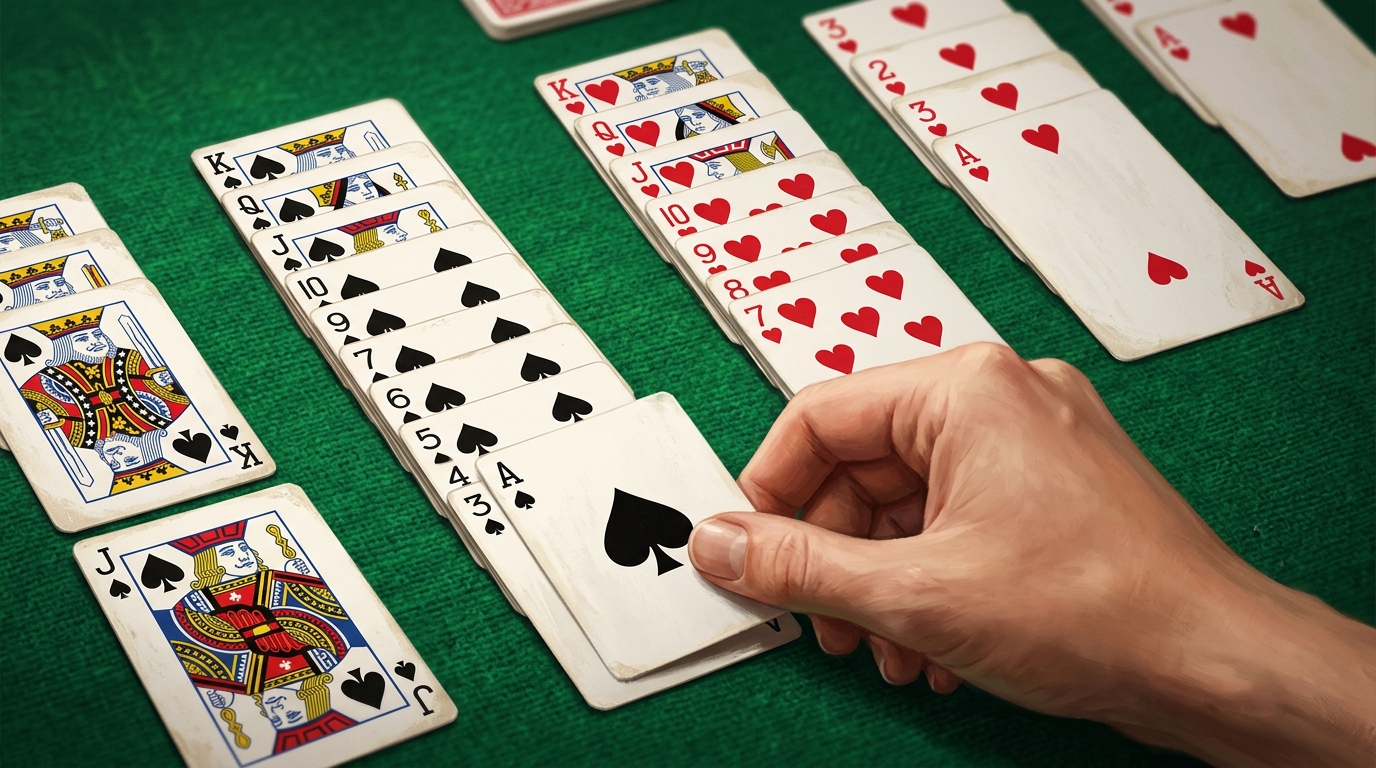
An empty Spider Solitaire column invites a king. The king fits, but the fit may close the only working lane on the board. Spider Solitaire king parking gives that moment a name, but the useful part is the habit behind it. The aim is not to make every move look clever. It is to make the next move easier to explain.
Why Spider Solitaire king parking matters on an ordinary puzzle
Spider Solitaire king parking matters because a king is the highest card in a descending sequence. It cannot move onto another card, so placing it in an empty column can be a long-term commitment. The move is useful when it reveals a card, separates a mixed stack, or creates a clear route for a same-suit run. A player does not need a special setup to use this idea. It works during a short browser session, on a printed page, or in the middle of a game when attention is starting to drift.
Spider Solitaire is a game of access under pressure. A card that is visible is not automatically useful, and a tidy stack is not automatically mobile. The strongest move often changes what you will be able to see two turns later. Empty columns, same-suit runs, hidden cards, and stock deals all compete for the same limited space. Treat each move as an exchange: what information or mobility are you buying, and what structure are you giving up? That question keeps the board readable when the columns start to crowd.
The wider background is worth keeping nearby. Bicycle Spider Solitaire rules offers useful context for this puzzle family, while Spider Palace rules guide gives a second view of its rules or history. The sources differ in purpose, but both support the same practical lesson: a clear structure gives the player something reliable to inspect.
How to use Spider Solitaire king parking without forcing it
Before parking a king, name the next job for the column. Will you use it to move a clean sequence, uncover a blocked card, or wait for a particular suit? If the answer is only ‘the king has nowhere else to go,’ keep the space open if another legal move can improve the tableau first. Start with a legal move and let the evidence narrow the field. If the position does not improve, stop. A good technique is a filter, not a command to keep pushing the same idea after the board has moved on.
A short routine for the next game
Use the king test: reveal, repair, or route. If the king does one of those jobs, park it and plan the next move. If it does none, scan another column and revisit the empty lane after the next deal or reveal.
- Name the column’s next job before parking.
- Check whether the king reveals or repairs.
- Leave space open when it has a stronger future use.
- Reassess the lane after every major reveal.
The mistake that makes this idea feel harder
The trap is confusing an empty lane with spare storage. A parked king can be safe and still unhelpful. Another mistake is keeping the lane empty forever because the perfect move never arrives. Space has value when it creates a real follow-up, not when it is protected as a trophy.
What to remember when the board changes
Good king parking keeps the board flexible. The empty column is not a place to hide a difficult card; it is a workspace that should keep earning its place. That is also why Spider Solitaire king parking should stay practical. Use it when it describes the board in front of you, then return to ordinary reading when the evidence changes. A puzzle is allowed to ask a different question on the next move.
If Spider Solitaire king parking does not produce a move today, that is useful information too. Leave the position clean, keep the strongest clue visible, and come back after one ordinary move. Techniques become reliable through that small return: notice the signal, test it, record what changed, and stop before the idea turns into a guess. Over time, the pause becomes part of your solving rhythm rather than a sign that the puzzle has defeated you.
Keep the session concrete. Name the clue, make one reversible change, and look again. That is enough for a useful practice round, even when the puzzle is unfinished. A short note about what changed makes the next session easier to start.
For a live session, play more puzzles on aarp-spider-solitaire.com. When you want a related example, browse related posts on this site. You can also try another daily puzzle at Easy Daily Puzzle or find more puzzle guides on Easy Daily Puzzle. Keep the next step simple: play one puzzle, try the routine once, and notice which decision became clearer.