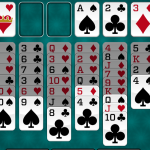
Whether you first discover it as a game on your computer or are introduced to someone else’s game, sraft always has a kind of charm for it. It’s the kind of game you can play to relax, concentrate, or challenge your patience when you need to take a break. What makes it even more attractive today is online playing without needing the deck. Just you, your screen, and the next step is to wait to be made.
But if you ever find yourself one step out of the end and suddenly stuck, you know thatcraft is a game about more than just luck. It’s a logical game, time and observation. And with the right strategy, you can turn it from something random to a clever game. So, let’s start by improving your overall approach before diving into some advanced techniques making the game like Freecell a useful challenge.

Perfect in dictatorship tactics
Understanding Rules and Goals
Before going too deep into the mixed strategy, it helps us to reconsider what it really is. The goal is very simple: build the foundation on the suit from Ace to King. In order to get there, you’ll move the cards between the columns, expose the cards, and use the stocks when you run out of options.
It may sound simple, but each step has long-term consequences. Knowing how the rules work and why some moving countries open up more opportunities than others is the difference between just playing and playing with the purpose of winning. Once you understand that, the game becomes less responsive and more about planning ahead.
How to Plan Ahead as an Expert
This is where good players separate themselves. It’s tempting to move a card just because you can, but the best players always think two or three moves ahead. Before you change anything, ask yourself what it unlocks. Will it free a mask card? Will it open a space for a king? Otherwise, it could be delayed.
The wisest step is often the way to create more flexibility later. Try to hold at least one empty column whenever possible because it is the strongest tool to reorder the article. Use it strategically to clear the way or temporarily hold one card while you build another sequence. The key is to make choices and not just act on the impulse.
If you’re playing online, you usually have an off button. Use it not to cheat, but to explore different options. Seeing a slight change in results will help you better understand what is best over time.
Manage cartoons and effective stocks
Balance the scene (the main domain) and the stock needs to be practiced. A lot of players flip over stocks too fast, wasting cards can be useful later. Instead, work as much as possible in the previous scene. Each card you reveal there will help you control the game.
When you draw from the stock, think carefully before dropping anything immediately. Sometimes it’s better to refrain from seeing if that card fits your long-term plan. On the internet, it’s easy to rush because things move too fast and you don’t need to deal cards by hand, but slow down often leads to more victories because it gives you time to think.
Avoid Common Errors
Even experienced people may have bad habits. One of the most common mistakes is sending articles to ex-husbands too soon. It feels productivity because eventually it is the goal of the game, but it can actually block the important step later. Let’s play cards until you’re sure they’re not needed anymore.
Another habit is to move Kings without clear planning. A drum column is strong, but only if you fill it in wisely. Avoid rushing to fill the gap with the first king you see and instead, wait for the king to support your series. Pollen is a game to reward patience, and that is often what separates a good game with a big game.
Advanced Freecell Technology
What makes Freecell different?
If classic entertainment is about patience and care revealed, the Freecell is about the strategy and thinking ahead. Each card was seen in the first place, meaning that luck played a much smaller role. Your success depends entirely on plans and sequences.
Because there is no hidden information, Freecell tends to reward logic and accuracy. Each move affects many future possibilities, and the challenge comes from managing open cells and empty columns effectively.
Owning empty squares and columns
The open cells in the Freecell will be the key to your strategy. They act like interim spaces, allowing you to move around to get what you need. But the real secret is learning when not to use them. Each cell occupied limits the ability to move cards, reducing the number of cards you can move along a sequence.
For example, if you have an open cell, you can move a card. With two, you can move three (one of each cell plus one). With four free cells, you can move a sequence of five cards. Mathematics combined very quickly, and it shows why keeping at least one or two cells open is important for flexibility.
Similar reasoning applies to empty animation columns. Each opening column will double your ability to move. Skilled players will deliberately create early spaces so they can control the longer cards later in the game. Think of each empty area as the subspirator for your strategy that helps you turn a blocked position into a winning position.
The screen has been closedName
In Freecell, the sequence is the key to preparing future plays. Try not to make long runs too early, especially if they lock down lower cards you’ll need later. Always keep an eye on the lowest cards for each suit, because they’re the last ones you’ll build on.
Good players will treat every move as part of the chain. When you turn 8 red to black 9, see what it opens up and what it closes. Sometimes the best move is a small water but unlocks a key card. It’s like solving a rear puzzle because you always work towards a clear table, even when the road there feels indirect.
Structure ending the popular free game
As you draw close to the end, try to resist the tendency to push your last move. The game ends at the Freecell which can collapse quickly if you ignore a blocked sequence. Focus on keeping the foundation balance so as not to get stuck waiting for a suit to catch up with others.
Try to maintain the cells open until the end, using them to release the keycards to complete your sequence. Many players often lose near the finish line because they fill all the gaps too soon. Be flexible until the final step because in the Freecell, the management is everything.
Max diversity to test
Once you’ve felt comfortable with the standard versions of the liquid, it’s worth exploring a few other types. Each player follows slightly different rules, and those differences can change the way you think and strategicize. Try new variations that keep the game fresh, and it helps you develop a more flexible thinking when you switch back to what you like.
There is also a hidden benefit: each variant reinforces different parts of your logical thinking. Some versions reward fast model identification, while others check patience or plan long-term. The more you play, the more sharp your strategy makes you better at all kinds of songs, from classical layouts to harder challenges.
With so many versions to play online, it’s easier than ever to find a version that fits your style. So these are some of the most famous people worth trying and what makes each other different.
The screen has been closedName Probably the team’s biggest challenge, especially in the two-board format. Instead of building with changing colors, you build the sequences of the same suit, adding a new layer of difficulty. The key is to focus on running at full speed. Many players find it useful to start with version one to familiarize themselves with the flow, then move upward to two or four sets of clothes for a real mental intern.
The screen has been closedName Bring in the math and compare the game. Instead of creating clothes or colors, you remove the cards combined into 13. It’s a faster game, but it still needs to be carefully planned. You will need to decide which pairs will be removed soon so as not to fall into a lower trap. The pyramid is the perfect place for people who love the balance of luck, logic and light strategy during practice sessions.
And then… The screen has been closedNameOne of the most popular online versions because it’s fast and intuitive. You remove higher or lower-level cards, which make it feel more flexible than traditional cards. The key here is to keep the streaks going as each one moves further points and momentum. It’s also a great version of playing when you don’t have much time but still want a satisfying challenge.
Each game tests a slightly different skill. Spiders teach patience and focus, Pyramid rewards good judgment, and TriPakes motivates you to think fast. Even if you play Freecell or classic Klondike version, mixing other styles will improve the way you analyze and adjust your strategy.
Tip for the Beginer
Start with patience and observation
If you’re new to Freecell, the best advice anyone can give is to slow down and slow down. Because each card is seen from the beginning, this version of the article rewards those who take the time to study layout before taking the first step.
Think of the opening scene as a puzzle waiting to be solved. Instead of rushing into the first step, plan two or three steps ahead. Try to identify which cards you need to move first to create the open columns and how you can use free cells without having to punch yourself. This first plan will create the rest of the game for success.
In the Freecell, there is no punishment to take time. Unlike the online time news versions that have driven you to move quickly, the Freecell rewards patience. The more thoughtful you are, the more likely you will be to see victory paths opening up after the match.
Wise Use of the Free Cell
Remember it called the Freecell for a reason! Those open cells are your secret weapon compared to the other forms of fluid. They allow you temporarily to move the card out of the road to access something buried deeper in the scene. But just because they’re there doesn’t mean you should fill in immediately. In fact, one of Freecell’s golden rules is never to fill all free cells at once.
When playing online, it’s very easy to have the habit of using all the cells available because you can move the card quickly using a mouse click. Try to resist that urge. Open at least one or two cells regularly, and use them on purpose. That restraint is often what distinguishes new people from more experienced Freecell players than those who seem to win easily.
Everyday Practice for Point Patterns
Like most tactical games, Freecell rewards practice. The more you play, the more you begin to recognize the repeat layout, move the sequence and solve the problem. You’ll start to see situations that have been complex and realize that you already know the best way to overcome them.
Most important, do not be discouraged by a difficult game. Some transactions are more complex than others, but each loss teaches you how to arrange, sequence and manage more effective free cells. Keep practicing, keep curious, and you’ll see that your winning rate is increasing steadily.
Pollen and Freecell are both rewarded with patience, vision, and willingness to think of many forward steps. Once you understand how each version works and how to balance short-term play with long-term goals, the game begins to feel less like luck and strategy. Continue testing with different variants, regular practice and remain calm when layouts look impossible. Over time, you will start winning more often not because you are lucky, but because you have learned to read the game!