An empty column feels like a win because it makes the tableau look clean. In Spider Solitaire, the better question is what the space can do next. Spider Solitaire empty column timing turns open space into a working tool rather than a trophy you protect.
The useful context
A vacant column can hold a movable sequence, expose a hidden card, or let you break a mixed-suit stack. It can also be wasted if you fill it with a card that does not improve the board. The value of space depends on timing and what the stock still threatens to add.
For background, read Microsoft's Solitaire history note and a clear Spider Solitaire rules guide. These sources provide the historical or rules context; the practical advice here is written for ordinary browser play.
Spider Solitaire Empty Column Timing
Before filling an empty column, ask which problem the move solves. Does it reveal a face-down card? Does it connect two same-suit runs? Does it make the next stock deal safer? If the answer is no, keep the space open for one more turn.
Use the column first for the move with the highest information gain. A reveal is often stronger than a cosmetic stack. Once the hidden card is visible, reassess the entire tableau. The empty column may then become a temporary parking place for a sequence that opens another column.
The useful detail in Spider Solitaire empty column timing is not a secret trick. It is a way to separate strong evidence from an attractive distraction. That distinction matters because casual puzzle sessions are usually lost through small commitments: one unverified letter, one premature card move, or one piece accepted because it almost fits.
If the first attempt does not work, do not restart immediately. Leave the board in place and name the point where your information became weak. A short explanation is more valuable than a perfect replay. It tells you whether the next session needs a slower opening, a different order, or simply a smaller challenge.
The common trap
The trap is filling an empty column with the first legal King. That can feel productive while removing the only place to move a useful run later. Kings are not automatically bad, but they need a job: reveal, repair, or prepare.
When the board feels crowded, return to the last decision you can prove. A short reset is more useful than adding more moves, more notes, or more guesses. The goal is to make the next choice visible.
A practical routine for today
Practice by pausing every time a column opens. Say the next three jobs the space could perform. Choose the one that changes the most hidden information. This small pause is especially useful in two-suit games, where one mixed stack can quietly block the whole board.
Keep the session small enough to review. One focused board teaches more than a string of rushed attempts, especially when the game is part of a daily break.
This approach also travels well between paper and browser play. On paper, the clue may be a pencil mark, a blank margin, or a small pile of pieces. Online, it may be a highlighted cell, a movable stack, or a saved position. The interface changes, but the question stays the same: what does this move make easier to see?
There is no need to turn a relaxing game into a performance test. A good routine should leave enough attention for noticing, not just finishing. Stop after a useful change, write down what opened, and return later if the board still has a clear question. That is how a narrow technique becomes a repeatable habit.
Keep the game moving
Spider Solitaire empty column timing is a lesson in patience. Space is strongest when it stays available long enough to answer the board's next real question.
For a live follow-up, play today on this site and browse more daily puzzles on Easy Daily Puzzle.
Keep Spider Solitaire empty column timing as a lens, not a rule that overrides everything else. When the board offers a stronger piece of evidence, follow it. The value of a named technique is that it helps you see a better option sooner, then get out of the way when the position asks for something different.
A useful test is to ask whether the position became more open after your move. More open can mean an exposed card, a cleaner crossing, a connected image area, or a smaller list of candidates. If the board became harder to explain, pause before adding another commitment. Good play usually leaves a trace that the next move can follow.
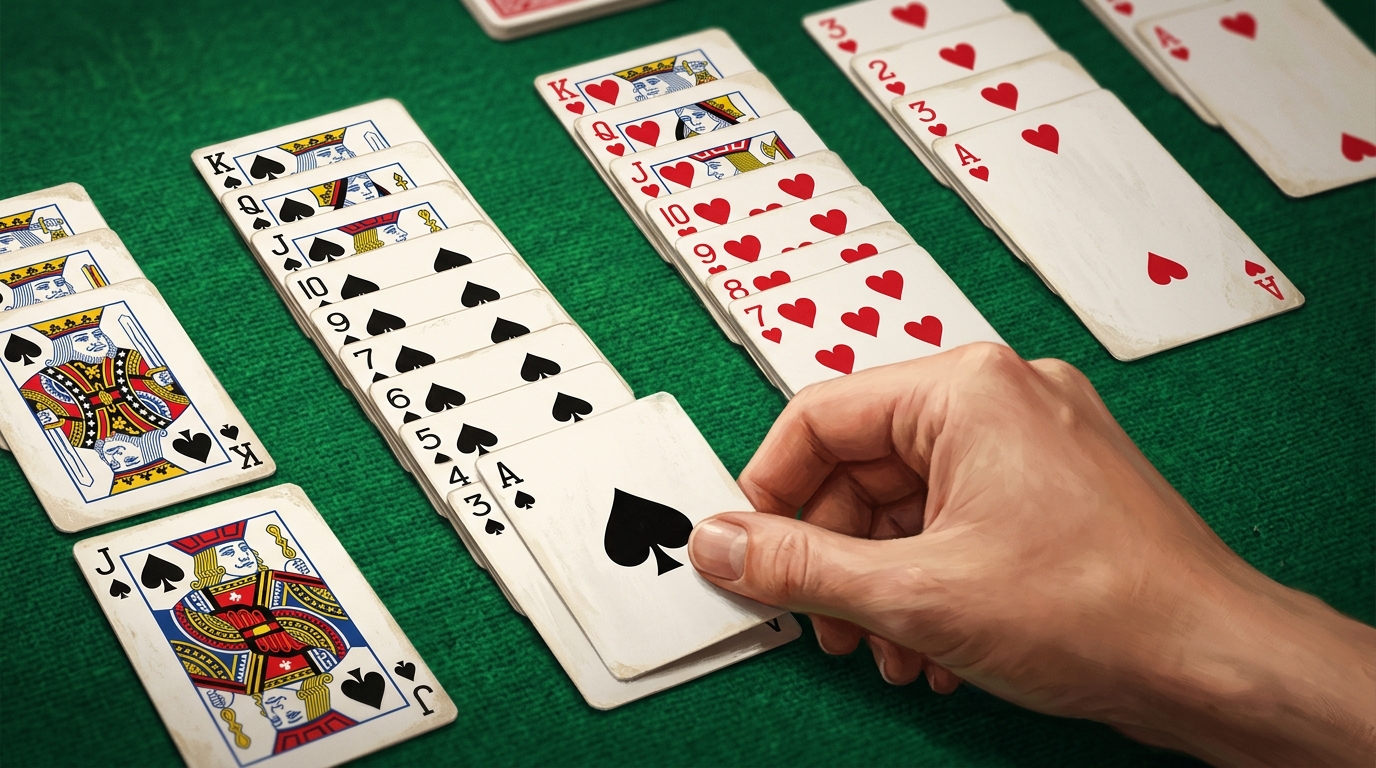
Image suggestion: an editorial illustration with alt text “Spider Solitaire empty column timing”.