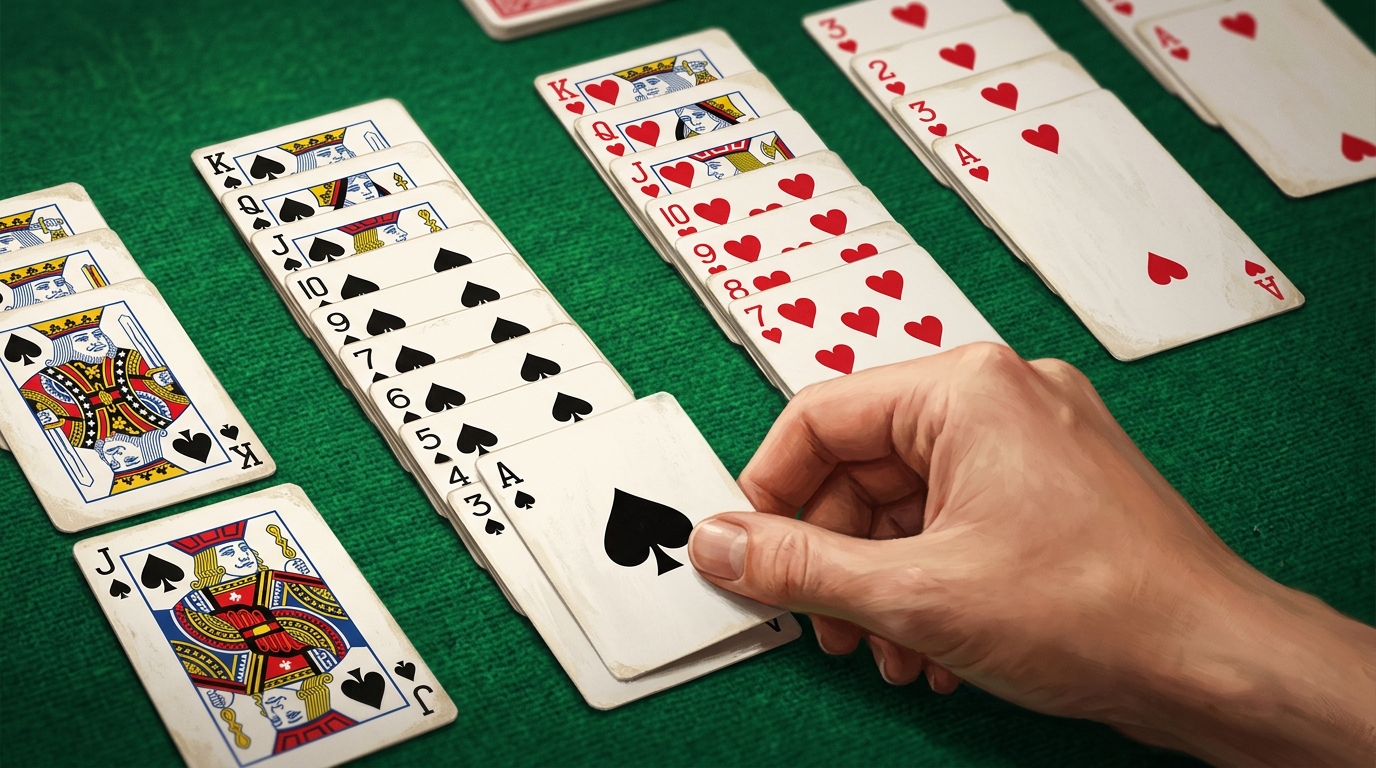
Spider solitaire rules can look crowded the first time you see ten columns, hidden cards, and a stock pile waiting at the side. The game gets much easier once each part of the layout has a clear purpose. That is the version worth keeping in mind on AARP Spider Solitaire.
What the layout is trying to do
The tableau creates work. The hidden cards create tension. The empty columns create room. The stock creates pressure, because every new row can either help or complicate what you already built.
What counts as real progress
According to Bicycle's rules, the goal is to assemble full in-suit sequences. That means not every downward stack is equally useful. Mixed stacks can move, but clean suit runs are what actually finish games.
Why the stock should wait
Drawing too soon is one of the easiest ways to make the tableau worse. If there is still useful work to do, do it before you add more cards.
The board is clearer than it first looks
Once you understand what each area of the layout is there to do, Spider stops feeling crowded and starts feeling methodical.
- Play on AARP Spider Solitaire
- Find more spider solitaire posts on AARP Spider Solitaire
- Read Bicycle’s Spider Solitaire guide
- Read Spider Palace’s rules guide
Spider solitaire rules are easier to remember when the layout stops feeling like clutter. Every pile has a job, and reading those jobs correctly makes the game much less intimidating.