Spider solitaire rules is easiest to trust when it sounds like advice from an actual player, not a manual. On AARP Spider Solitaire, the goal is simple: give readers a useful reason to open a spider solitaire and keep going after the first awkward move.
This piece takes the patient instructor angle. It stays close to the board, explains the small decisions that matter, and keeps the old story of spider solitaire in view without turning the post into a dry museum label.
Spider solitaire rules becomes clearer through variants
One-suit, two-suit, and four-suit spider change the difficulty sharply. The more suits in play, the more each mixed column matters. A variant is useful when it teaches the player to notice something the classic format was already asking for.
The safest way to try variants is to keep the first session small. Learn what changed, play slowly, then return to the classic game. Most players find that the original board looks sharper after the detour.
Why Spider solitaire rules feels useful to real players
A spider solitaire player feels the deal change when one hidden card turns over or one column finally opens. The board can look stuck, then suddenly have space. This is where Spider solitaire rules becomes more than a phrase. It describes the exact moment when a player wants a cleaner way to continue.
The useful habit is to protect that space. Empty columns are not decoration; they are where the player tests, repairs, and rebuilds the deal. A good spider solitaire post gives that kind of instruction. It sounds practical because the advice can be tested on the next board, not someday after the reader becomes an expert.
How to use Spider solitaire rules during a real game
Spider solitaire rules becomes practical when the advice is small enough to use during a real game. The reader should not need a notebook beside the screen. One or two better habits should be enough to make the next spider solitaire feel less random.
The list below is intentionally plain. It is the kind of advice a regular player can try today without changing the way the site works or turning a casual puzzle into homework.
- Empty columns are working space, so do not fill them with a weak move too quickly.
- Expose hidden cards before polishing visible stacks that already look neat.
- Build in suit when possible, but accept a mixed move if it uncovers a useful card.
- Delay the stock until the board has no meaningful moves left.
- Before moving a king, ask whether that column can be reopened later.
Spider solitaire rules and the player habit behind it
That habit is where Spider solitaire rules stops sounding like a keyword and starts sounding like useful advice. A reader should leave with a next move, not a lecture. The board should feel a little more readable, even if the game is still hard.
Experienced players often talk about puzzles as if success comes from instinct. Instinct helps, but most of it is repeated attention. The player looks, checks, resists a tempting move, and lets the board give up one more clue.
One useful way to test Spider solitaire rules is to play a fresh round and change only one habit. If the game feels a little less messy, keep that habit. If it does not help, drop it and try another.
How AARP Spider Solitaire can make Spider solitaire rules easier to follow
On AARP Spider Solitaire, the strongest guide sends the reader back to the game with a clearer plan. That is especially true for spider solitaire, where the next move often matters more than a long explanation.
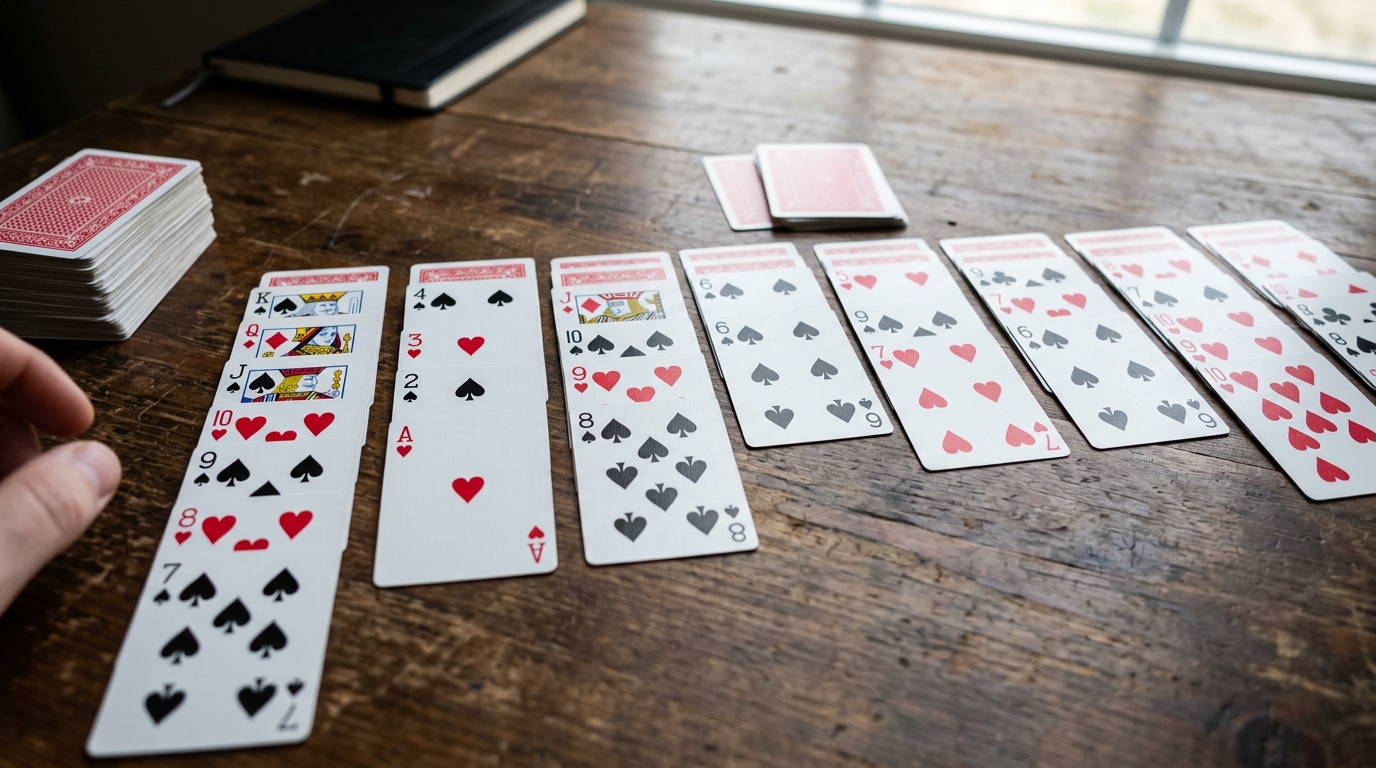
The page should leave some air around the advice. Short paragraphs, visible headings, one useful image, and a few honest links make the post easier to scan. Readers can take the part they need, then return later when the same problem appears again.
The phrase Spider solitaire rules should feel like a thread through the article rather than a label pasted on top. If the reader remembers one habit from the piece, the wording has done its job.
Useful next reads for Spider solitaire rules
If the next step is playing, start with AARP Spider Solitaire main page. If the reader wants a few related posts before opening another game, the site search page is a natural follow-up: more spider solitaire articles on AARP Spider Solitaire.
For outside context, two useful references are Bicycle Cards on Spider Solitaire and Spider Palace strategy guide. They are worth opening when a reader wants the background behind the game, its rules, or its puzzle culture.
What to remember about Spider solitaire rules
The best use of Spider solitaire rules is not to memorize a giant rule list. It is to play one cleaner round, notice one better pattern, and carry that habit into the next puzzle. That is how casual games become satisfying without becoming noisy.